

After a family member passes away in prison or jail, people are often left with basic questions. To get answers, they have to get creative.
By Aala Abdullahi, Shannon Heffernan and Brittany Hailer
The Marshall Project
https://www.themarshallproject.org/

When someone dies in jail or prison, the circumstances surrounding their death are often shrouded in secrecy. Along with grief, their loved ones are left with basic, unanswered questions.
Accessing records can be difficult. And facility staff may refuse to speak. The silence allows medical neglect, violence or other forms of misconduct to remain hidden. In the absence of answers, families often have to become detectives — finding creative ways to learn what happened to their loved one.
In these as-told-to’s, edited for length and clarity, three women detail their search for answers. One describes her process as “putting together a puzzle with no picture.”
“I was making it very clear that my dad had someone.”
By Courtney Crosby, as told to Aala Abdullahi
Courtney Crosby remembers her father, Craig, as someone who defied age. At 55, he prided himself on being active, managing his diabetes carefully and keeping a blood pressure cuff in his living room. “He would always say he was like Benjamin Button, aging in reverse,” she recalled.
The last time Courtney and her father hung out, it was at his apartment in Atlantic City. She remembers him dropping to the ground abruptly to do pushups: “So youthful and so full of life and energy, that’s how I remember him,” she said.
That image made his death inside Nevada’s High Desert State Prison especially hard to accept. Craig was serving a short sentence for a decade-old DUI and was only expected to be there for a year. After his release, he hoped to finally make his longtime dream come true by moving to New York, where Courtney also lives.
On March 15, 2025, an associate warden at the prison called Courtney to tell her that her father had died of natural causes. At the time of our interview in early June, she had not yet received the full autopsy report and had turned to a Facebook group for answers.
The report, which she received later that month, ruled his death an accident. But Courtney says she still has questions: “If it was an accident, does that mean it could have been prevented?” And, “Was he scared?”
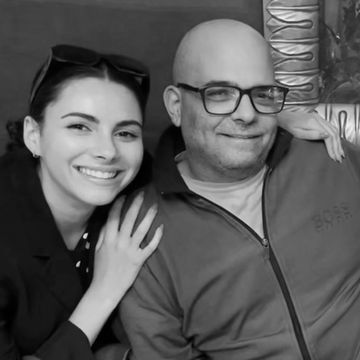
My father was very into his health, and he was managing his diabetes fine before he went to prison. Throughout his short incarceration — about five months from his sentencing in October until his death that March — we maintained constant contact. He was routinely telling me that he wasn’t getting his medication. It was either the wrong kind, or he didn’t get it when he was supposed to have it. I was calling the facility’s family liaison, actively advocating for him to receive his medication. I’m a public defender, so they didn’t intimidate me. I was making it very clear that my dad had someone. It was like, I’m on it. I’m watching.
There was a span of time where I didn’t hear from him for like, two weeks, which was really unusual, because he was calling me like every day. Once we got back in contact — on Valentine’s Day — he told me that he had his big toe amputated. He was in extreme pain. My understanding is, when you have issues with your feet, that’s like a side effect of diabetes being mismanaged.
When one of the associate wardens called on March 15 to tell me my father passed away early in the morning. I was flooded with questions: How did it happen? Was it abrupt? Was he found in bed? Was he asleep? Was he found on the floor? Did he hit something on the way down?
He had talked about his bunkie before, but they were saying he was alone. I found that unusual.
I wanted to know if he suffered, too.
I turned to a Facebook group for answers. I found a private group meant for the family of people incarcerated at the prison where my father died. There’s a rigorous process for being accepted; you have to prove that you have a loved one incarcerated at High Desert State Prison.
In the group, people post routine questions all the time: How do you put money on someone’s commissary? How do you send someone messages? What’s the visiting schedule? It’s like a brain hive.
Four days after my father’s death in March, someone in the Facebook group posted about a man with diabetes who had passed away at the prison. I think they were trying to identify if anyone in the group was related to the person who died. It was my dad that they were talking about.
“This is my dad. Does anybody have any information that they could share?” I wrote.
A few people even messaged me privately to say they would ask their loved one if they knew anything about what happened with my father, and report back.
The things I heard helped guide my next steps, even if they were just rumors or hearsay. I heard there was a “man down” button in every cell, which is an emergency button or bell you would hit if you needed help. Someone shared that my dad had rung it multiple times and nobody answered. The men he was incarcerated with knew that he was struggling with diabetes.
I didn’t know about the “man down” button, and I felt like that was something that could be verified. I would think that a prison would have some sort of record-keeping for when a “man down” button is rang. It occurred to me that this is something an attorney could request in discovery, so I flagged it to my attorney that my dad may have rung the “man down” button multiple times.
All of this was very speculative, but my family and I were really desperate to know the truth.
We still are.
The Nevada Department of Corrections Public Information Officer did not respond to fact-checking questions about emergency buttons in cells or about why Crosby was alone, without a cellmate present, when he died.
“It was soothing to put the puzzle together.”
By Jacqueline Ciccone, as told to Shannon Heffernan
Justin Ciccone died on May 3, 2020, after deputies in Kentucky’s Rowan County Detention Center tased, beat and choked him, according to the wrongful death lawsuit that his parents settled in 2022.
The 34-year-old amateur photographer was driving from his family home in Virginia to Colorado when he was detained in Morehead, Kent. He’d knocked on a stranger’s door in the middle of the night.
Justin was likely suffering a mental health crisis, according to the lawsuit, which named Rowan County, its jailer and six deputies involved in the incident. But police arrested him for public intoxication without performing a sobriety test. At the jail, deputies blocked a nurse from screening or treating him, says the suit.
Within 15 hours of his stay, Justin was in his cell naked, refusing dinner and incoherently taunting a deputy who, according to the lawsuit, stuck a Taser into his food slot and called for his door to be opened. Justin ran out, and several deputies fatally assaulted him. A blood test performed an hour after the beating found no illicit drugs or alcohol in his system. His mother, Jacqueline, describes her investigation into the end of her middle child’s life.
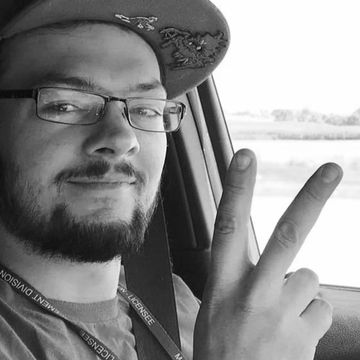
Justin was kind of the quiet one among my three sons. He was interested in people and nature, and he was planning to get into the cannabis industry. When I didn’t hear from him the morning after he left for Colorado with his dog, Marley, I got worried.
That afternoon, around noon, a family in Kentucky called me; they’d found Marley running around by herself, and my number was on her tag. I then called Justin. After he didn’t answer, I looked at his Chime account and saw that he’d gotten gas in Kentucky. From there, I called the state police.
“Oh, yeah, we found him,” I remember them telling me. “He’s at this jail.”
I called [Rowan County jail] five times that day. And it was, “Oh no, he’s acting out right now. He’s too aggressive right now to talk.” I called into the evening.
My oldest son and I set off at 8 a.m. the next morning to go pick up Marley. We were about five hours into the six-hour drive from Virginia when officials called and said [something like], “There’s been an incident, and you need to come now.” It was like an apologetic kind of thing.
When I first saw Justin in the hospital in Lexington, he was bruised. He looked like he had a grapefruit on the side of his head from the swelling. He was on life support, so I couldn’t ask him what happened.
For [most of] his 34 years of life, I knew everything that happened to him. I couldn’t close the book, not knowing. I wanted to be able to tell his friends what happened. It would have been easier if he had died in a car accident, because at least then I could say: This is what happened.
The first few months after he died, I felt that I needed to collect all the information I could about his last days. I was so focused. It was like I was putting together a puzzle with no picture.
I called the gas station, where I saw from bank records that he had paid for gas about an hour before all this happened. I called the people at the house where he knocked on the door at about 1 a.m.; he was probably looking for Marley. They sent me their home security video showing Justin knocking and then kind of backing away. I called the hospital and got a half-inch-thick stack of documents. I called the coroner every week, and I remember talking to an old man at the coroner’s office to make sure they sent me the report.
It was soothing to put the puzzle together. It’s not like I wasn’t sad, but putting the pieces together kept me from crying when I was making phone calls or filling out a form to request records.
I called the jail and asked them for their surveillance videos of what happened to Justin, and they just sent them to me. I never watched the videos, though; I don’t know if I’ll ever want to. I know enough from how the footage was described to me. Our attorney said that nobody would have thought he was in his right mind.
There was a point it was clear we needed to talk to an attorney. The lawyer for the officers who beat Justin decided to settle, but asked if they could remove the individual names from the suit.
“Absolutely not,” I remember telling them.
I wanted their names to be there in perpetuity. I didn’t want them to forget. I didn’t want that to happen to anybody else.
After the lawsuit was over, I wrote one of the officers a letter. I may have read and edited that letter hundreds of times. During his deposition, he was asked if he would do anything different.
“No,” I remember him saying.
It was a cold feeling to know that. How would your mother feel if this happened to her child? I wrote. I just needed to get my anger out. I just needed to say: You did this.


You must be logged in to post a comment Login