
Kimmie Horne closed the festival that bore her name. Then she took the stage in Fort Worth
By Stephanie Ward
Texas Metro News

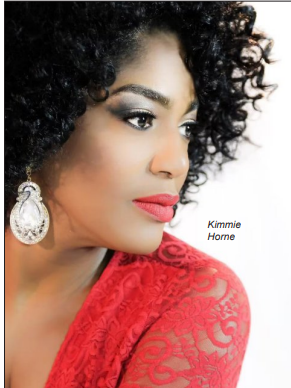
FORT WORTH, Texas — Before 200 guests in black tie at McDavid Studio, Kimmie Horne walked onstage in a shimmering black gown and began to sing. Soon she was scatting, moving through jazz and improvisation in a set that made her a favorite of the room. She did not stay put. She worked the floor between the gold chairs and red-draped tables, microphone in hand, a crown of curls and sparkling cuffs catching the red and violet wash on the walls while guests turned in their seats to follow her. At one point she pulled a man from the audience, whom she called Fred, onto the floor and danced with him. When she was joined by Tatiana “LadyMay” Mayfield, the Fort Worth jazz and soul vocalist honored that night, the two voices together lifted the whole studio.
That was Thursday, Oct. 22, opening night of the Sparks Resilience Awards Gala, hosted by Dr. Brendalyn Jackson of Sparks Entertainment, which had brought Horne to Fort Worth to headline.
The Detroit-born vocalist had arrived with a decade behind her that she had only just closed. For ten years she ran a free jazz festival with her own name on it. This past July she ended it, and two and a half months later she was in Fort Worth, singing. The story of how she got from one to the other starts in a house.
As a little girl in Detroit, Horne helped clean the instruments. Her father, a professional musician and, as she puts it, a carpenter, had rebuilt their home into a recording studio. The house filled with rehearsals, recording sessions and people listening back to what they had just played. Musicians came through. There were drums to help sound-check. For a child interested in music, even the chores offered proximity to something worth watching.
“Our house was full of live music rehearsals, recording and listening sessions every day,” she recalled in written responses to questions ahead of the gala.
Long before she would sing internationally or put her name on a festival, Horne was learning what it took to make a room sound right.
That is a useful place to begin with a woman whose famous surname can send a conversation in another direction before she has had a chance to enter it. There is Lena, of course. There is also her uncle Cleveland Horne, of the Fantastic Four, with whom she sang jazz standards and worked out duets and harmonies. And there is the girl who liked being around the instruments, taking in the daily business of making music.
The family name had never been an entirely simple inheritance.
After learning of her relationship to Lena Horne, Kimmie began watching her films and studying her interviews. Here was evidence that a woman in her family could sing, dance and act, and that those ambitions might be available to her, too, if she worked at them.
But admiration met resistance at a family reunion. Horne approached her uncle Odean, the family patriarch, eager to ask about Lena, who she understood had once attended a reunion. His response startled her. In Horne’s account, he spoke angrily about a divide between the light-skinned and dark-skinned branches of the family, saying that one wanted nothing to do with the other.
It was an elder’s account of a family wound, and Horne took it seriously. For a long time, she stopped mentioning Lena around the relatives to whom she was closest. The public saw a name associated with glamour and achievement. Within the family, she had encountered a history of colorism and hurt that complicated her pride in it.
Eventually, Horne hosted a reunion herself. For the occasion, she put together a performance that moved through the family’s music: songs associated with Lena, the R&B of the Fantastic Four with her uncle Cleveland, and the music of her own years performing internationally. She remembers the elders receiving it in a way that made room for the younger Hornes to appreciate the family’s musical history.
A song, it turned out, could open a conversation she had once learned to avoid.
It is a conversation she is still having. Horne said that telling this story was the first time she had spoken openly about the colorism in her family, and that she found it liberating.
Her voice is an invitation in itself: smooth, crystal-clear jazz that draws a listener closer and makes the final song feel premature.
She has always preferred to be close to the people listening. More than a decade ago, playing the Jazz Cafe at Detroit’s Music Hall, the room now called Aretha’s Jazz Café, she took to walking out into the audience mid-set. Her sound engineer built her a custom hundred-foot cable so she could roam. She called it the Kimmy Horn cable, and it was hers alone, she later recalled in an interview at the venue, partly because her microphone always had lipstick on it. At McDavid Studio she did it again, leaving the stage to sing among the tables.
One of the people who helped her recognize where that voice belonged was someone she had not expected to find in her audience. Horne was singing at a private event when Betty Carter walked in and sat near the front. During a break, Carter drew her aside and encouraged her to sing more jazz. As Horne remembers it, Carter heard a natural sound, a feel for interpretation and phrasing, and an energy she found refreshing.
For a singer with a celebrated name, it was a particularly useful assessment. Carter was responding to what she heard that evening.
Travel widened her musical education, and Japan in particular became more than a stop on an itinerary. Horne lived there, learned to speak and sing in Japanese, and produced Japanese Motown shows. She still makes an annual trip, and the relationships formed there stayed with her: musicians to talk shop with, singers to meet, chances to jam.
The résumé she carried into her festival years was already long. She had opened for Aretha Franklin and sung rooms as far-flung as the Bellagio and the Venetian.
It was, in a sense, a career built for export. What she wanted next was something she could not take on the road.
“I love music, but I started to feel that I wanted to see and support my peers who were out there performing and creating new music,” she told BLAC Detroit in 2022. “The only way for me to do that was to create a platform in which I could invite them, pay them.”
She launched the Kimmie Horne Jazz Festival in 2016: a free, two-day event with eight performers a year, “all kinds of jazz,” and each year a duet called “Sisters in Song,” herself and another singer, “something new that highlights my life.” She had a fairly specific idea of what should surround it: vendors and food, a bicycle cruise, hula-hoop fitness, majorettes. It would be a place where a family could make a weekend of the music, and admission would be free.
Her foundation grew from the same impulse. Visits to schools, hospitals and senior facilities had shown her how unevenly music was available to children, patients and older people, and she had grown up in a house where rehearsals happened every day. She describes supporting young musicians’ jazz camps, music spaces for families served by Ronald McDonald House facilities, mental health education and public art.
She also created a Lifetime Achievement Award for older musicians, and the private conversations with recipients mattered to her as much as the presentation. She wanted to hear about their years while they were there to tell her.
Then, this summer, she ended it. Her farewell post was a cascade of photographs, including her sister Joyce, billed as “Sister-N-Star,” and a thank-you that named volunteers, sponsors, mayors, security and artists. The comments were warm and a little bereft, years of attendance, volunteering and vending, and the same question in different words: Is it really over?
It was not the first time Horne had lost a stage. During the pandemic, performance opportunities disappeared, and she felt depressed and uncertain about her future. Then her mother mentioned on the phone that she missed going to her live shows. Horne answered by creating “The Rhythm Room,” a live Facebook show that she hosted and performed herself, debuting it on Mother’s Day. The audience would have to meet her differently, but her mother could hear her sing again. In Horne’s telling, thinking about someone who missed the music helped her move past her own fear about what came next.
It also helps explain why Jackson’s invitation to the gala appealed to her. Horne recognized the work of continuing after difficulty, which she had met while building a festival, seeking support for other musicians, and finding a way to perform when live engagements stopped.
Before a show, she tells herself that she hopes the people in the room will enjoy themselves as much as she is about to. “I simply want everyone to have a good time and feel special,” she said ahead of the gala.
At McDavid Studio on Oct. 22, they did.
Away from the stage, she is still tending a house. She loves decluttering, organizing and home design, and she treasures time with her 85-year-old mother.
Asked what she still wants to do musically, she gives a brief answer: record more original music.
There is something fitting about that ambition for a woman whose earliest memories include a house being remade around sound, and who has just spent a decade building a festival around it. She has spent years singing songs that carry other people’s histories, including the complicated history of her own family.
She has more of her own to put on the record.
Stephanie Ward is the Founder of Red Lime Media and a correspondent for Texas Metro News. A former long-time, award-winning journalist, Stephanie loves exploring the world through travel, photography, storytelling, and community service.
You must be logged in to post a comment Login