Welker chats with ESSENCE about the women who shaped her career, the responsibility of covering American politics, and why getting the story right matters more than ever.
By Rayna Reid Rayford
Essence
https://www.essence.com/

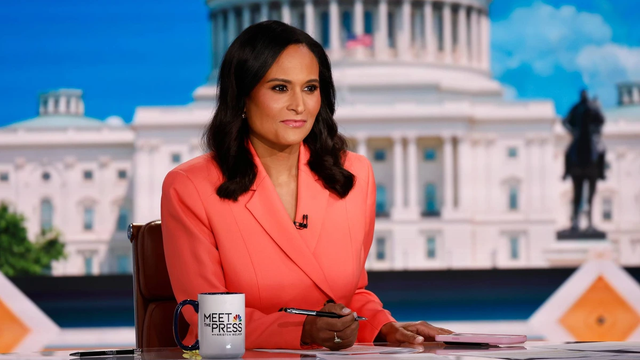
“My mom ran for City Council [in Philadelphia] when I was in high school, and I was fascinated by the political process,” Kristen Welker tells ESSENCE. It was a “very contentious” race, and Welker recalls reporters who covered the election focusing on the fact that her mother, a Black woman, was married to her father, who is white. “That always stuck with me,” she says.
Her mother’s response was enlightening. “Look, these are questions that voters might have,” she was told. And for Welker, the takeaway was clear—it is extremely important to ask difficult questions “from a place of compassion and understanding,” with the goal of getting an answer on behalf of voters.
This was an early lesson in journalism that would ultimately help to shape her career. Decades later, she laughed as she shared how her mother’s former political opponent, John Street, now encounters her mother at the grocery store and tells her, “I love watching your daughter on ‘Meet the Press.’”
Today, Welker is the 13th moderator of NBC’s “Meet the Press,” the longest-running television show in American history. She is only the second woman to hold this role and the first journalist of color to moderate any Sunday public affairs series. She approaches her role with a keen understanding of its importance as a political journalist, living out the maxim that with great power comes incredible responsibility.
She credits women like Andrea Mitchell and the late Gwen Ifill, who took her under her wing when Welker first moved to Washington, with helping pave the way. “I feel a responsibility to make sure we are hearing from a diverse set of voices every Sunday,” she says. “It’s the responsibility that I feel to make sure that I’m getting it right, and it’s the responsibility that I feel to make sure that we are listening to a broad range of perspectives.”
“Restoring trust is one of my main responsibilities every Sunday,” Welker adds. For her, that means having conversations that are accessible to people across the country, and working to ensure they don’t “devolve into Washington speak.” She is determined for Meet the Press programming to have “discussions that elicit new information, that push our national debates forward, and that help shine a light on candidates who are asking voters to vote for them.”

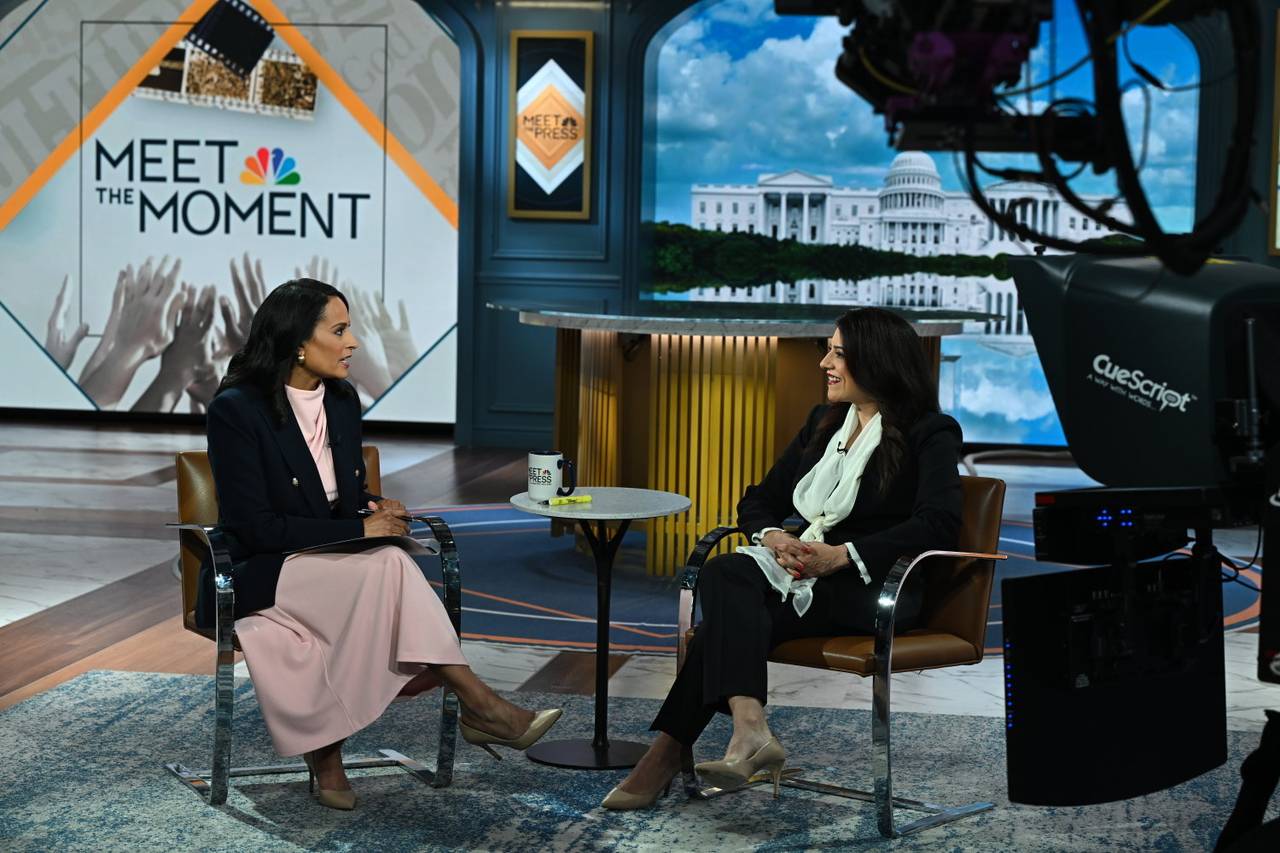
Having interviewed some of the world’s most powerful public officials, including President Donald Trump, Ukrainian President Volodymyr Zelenskyy, and Cuban President Miguel Díaz-Canel, Welker knows accountability requires preparation. She describes the process, which includes extensive research, poring over past statements of interviewees, identifying unanswered questions, and conducting mock interviews. She’s always asking, “What questions do voters need so that they have the facts necessary to make the decisions when they go to the voting booth?”
Her guiding principle is straightforward. “We have a saying here at Meet the Press that we are informative, not performative.”
But whose voices are being heard in those conversations? When asked whether the media adequately captures the complexity of Black women’s priorities, Welker candidly acknowledged that the industry can do more. “I think there’s always more work to be done as it relates to capturing the priorities of Black women voters and of voters, quite frankly, across the spectrum.”
She proudly pointed to “Meet the Moment,” a newer segment that expands political conversations beyond elected officials to people who have an impact on the political sphere and national dialogue. Guests have included Olympic champion Allyson Felix, entrepreneur Emma Grede, and civil rights icon Ruby Bridges. Still, she believes “there is more work to be done, and I think that it’s always worth redoubling our efforts and asking ourselves: are we doing enough?”
That question feels especially relevant as the country approaches the upcoming midterm elections. Since arriving in Washington, D.C., in 2011, Welker has watched the political landscape become increasingly divided as social media and artificial intelligence have accelerated the news cycle.
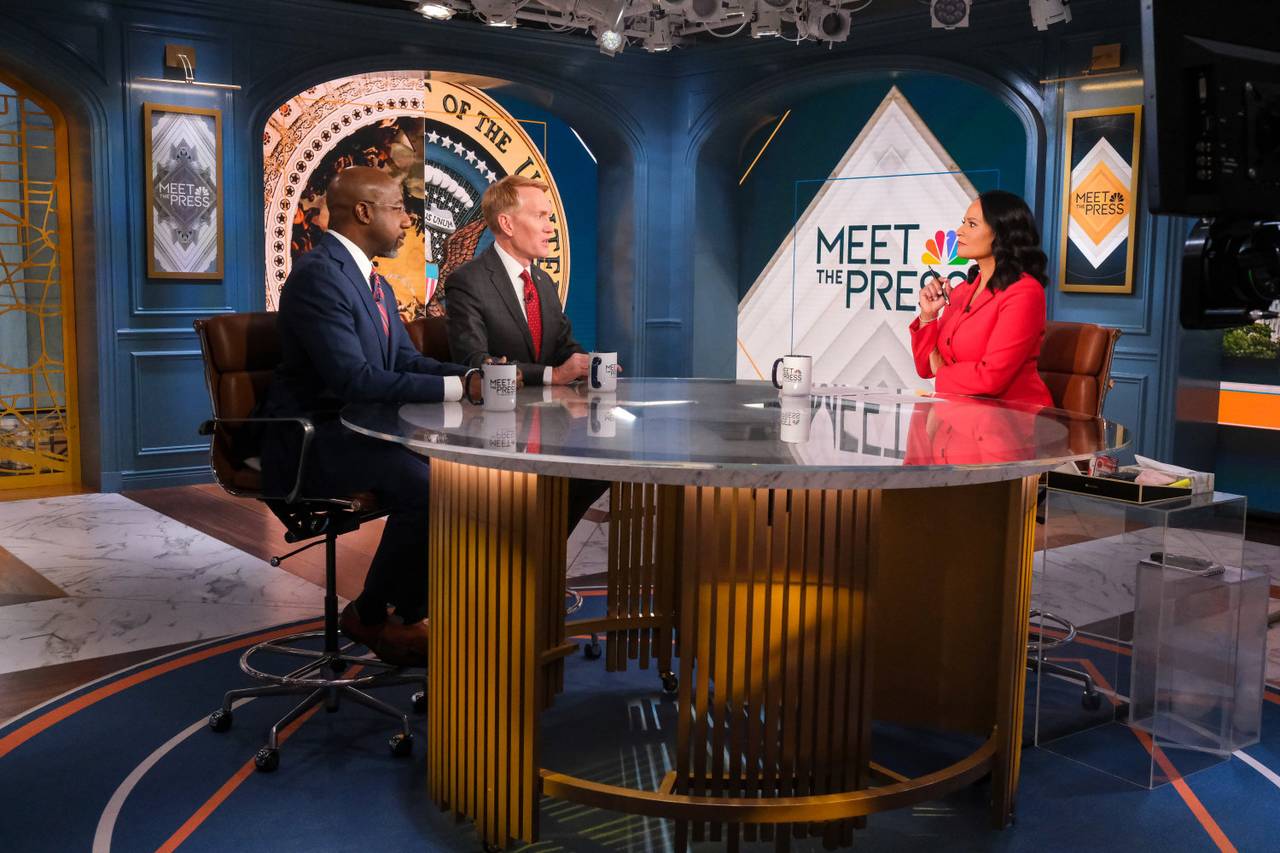
The challenge, she says, is resisting that pressure to move rapidly at the expense of accuracy. “Our role as journalists has never been more important,” she says, emphasizing the need to hold elected officials accountable and provide critical and reliable information to voters.
Out on the campaign trail, Welker relays what voters have told her. People have deep concerns about affordability and healthcare. She explains how people don’t want buzzwords; they are worried about whether elected officials truly understand the financial pressures facing today’s families. Moreover, she says voters view these economic issues as bipartisan problems. Because while polling can provide valuable information, Welker believes a true understanding of the electorate requires more than just looking at the numbers. Directly listening to people across geographic, political, and socioeconomic lines is imperative.
What does she wish more Americans understood about the political process? “I hope that people know that most political journalists are out there trying to get real answers for the American public.” She was quick to note that she occupies her moderator seat alongside “an incredible group of female moderators on other networks,” saying, “we are all out there fighting to get answers on behalf of voters and get it right for the people who are watching us every Sunday.”
And though her inspiration began with her mom and dad, the next generation constantly renews it, particularly her own two children. “One of the greatest joys of my life is that I get to be a mom to two young kids,” she gushes. “My daughter is five and my son is two, and it’s extraordinary to have this role and two young kids.”
Motherhood has clarified her purpose as moderator of Meet the Press, she explains. “We are doing this to make sure that we are informing the American public today, so that we can have a bright future for the next generation, for kids like mine.”


You must be logged in to post a comment Login