By Dr. Cynthia J. Hickman
Forward Times
https://www.forwardtimes.com/

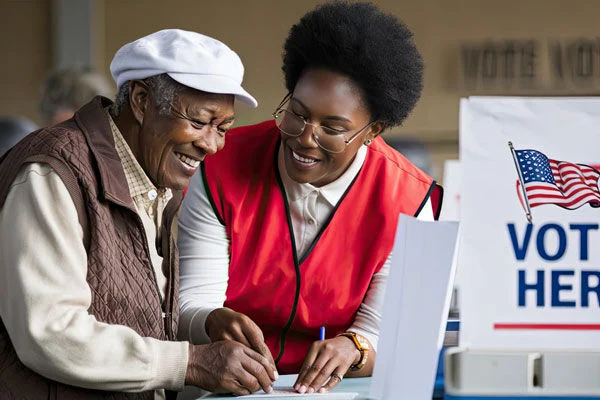
For older Texans in assisted living, nursing homes and other care settings, voting may require extra planning. Here’s how residents, families and caregivers can help make it happen.
’Tis the season for voting and making our voices heard. As Election Day approaches, I want families and caregivers to ask an important question: Have we made a plan for our older loved ones to cast their ballots safely, securely and according to their own wishes?
For seniors living in assisted living communities, nursing homes, group homes or long-term care settings, that question can be easy to overlook. A change in living arrangements may mean a new mailing address, transportation needs or a greater reliance on others for daily activities. But needing care does not mean losing your voice.
I have spent years advocating for caregivers and the people they love. One thing I know is that we cannot assume someone else has handled the details. When it comes to voting, a little preparation can make a meaningful difference.
A Change of Address Should Not Become a Lost Vote
Some residents can travel to the polls independently. Others may need a ride from family, friends or their facility. Still, others may be eligible to vote by mail. The right option depends on the individual, not simply on where they live.
Start by asking the resident what they want. Then check that their voter registration is current and that their mailing address and voting arrangements are understood. Texas’s voter registration deadline for the November 3 election was October 5, but registered voters can still confirm their status and contact their county election office about questions.
Voting By Mail: Know The Rules
In Texas, registered voters who will be 65 or older on Election Day may apply to vote by mail. Eligible voters with a qualifying sickness or disability may also apply, even if they are younger than 65. Living in a nursing home or assisted living facility does not, by itself, automatically qualify someone for a mail ballot.
A voter must submit an Application for Ballot by Mail (ABBM) to the county early voting clerk. For the November 3 election, that application must be received by Friday, October 23. A postmark alone is not enough. Voters applying because of age or disability may be able to have their ballots mailed to an eligible care-facility address.
The application and returned ballot carrier envelope require identifying information under Texas law. Follow the official instructions carefully and use the applicable Texas driver’s license, personal ID, election identification certificate or Social Security number information, or the designated option if none has been issued. Inconsistent or missing information can cause delays or problems.
Once the ballot arrives, follow the instructions for marking, signing and returning it. For most domestic mail voters, the completed ballot must reach the county by 7 p.m. on Election Day if it has no qualifying postmark; a ballot postmarked by 7 p.m. Election Day may generally arrive by 5 p.m. the next business day. Do not wait until the last minute.


When Getting to the Polls Is Difficult
Voting in person may still be possible. Texas polling places provide accessible voting equipment. Voters who are physically unable to enter a polling place can request curbside voting, where an election official brings voting materials to the voter at the designated location.
Voters who need assistance because of blindness, disability or inability to read or write may also receive legally permitted help at the polls. They may choose an eligible person to assist them, subject to restrictions, or request assistance from election workers. The assistant must follow the voter’s directions and must not influence their choices.
Families should ask care facilities whether transportation is available, whether staff can help coordinate an outing, and what arrangements can be made for residents who need mobility assistance. If the facility cannot help, contact the county election office to discuss available voting options. Do not assume transportation or on-site voting services are automatically provided.
The Voter’s Choice Comes First
Here is something I want every caregiver to remember: assistance is not permission to decide for someone else. A resident who needs help walking, reading or completing paperwork may still be fully capable of choosing candidates and making their own decisions. Protect their privacy. Ask what help they want. Respect their choices.
And if an unexpected serious illness or physical disability arises close to Election Day, contact the county election office immediately. Texas has a separate emergency-ballot process for certain qualifying conditions that begin on or after October 22; it has additional requirements and deadlines.
As Your Proactive Caregiver Advocate, I believe voting matters at every stage of life. Let’s make sure our elders are not left out simply because the process requires a little extra care. Ask the questions, make the calls and help them put a plan in place.
Be safe! Be well! Bye for now!
HELP AN OLDER LOVED ONE MAKE A VOTING PLAN
- ASK what the voter wants and what assistance, if any, they need.
- CHECK registration and the correct mailing address.
- PLAN for a mail ballot, a ride, accessible equipment or curbside voting.
- CONTACT the county election office early if anything is unclear.
OFFICIAL RESOURCES
Texas mail-ballot application: https://www.sos.state.tx.us/elections/voter/reqabbm.shtml
Voting by mail instructions: https://www.votetexas.gov/voting-by-mail/index.html
Accessible voting and assistance: https://www.votetexas.gov/voters-with-special-needs/
Curbside voting: https://www.votetexas.gov/voting/curbside-voting.html
Harris County election office: https://www.harrisvotes.com/ | 713-755-6965




You must be logged in to post a comment Login