

The Marshall Project found 70,000+ allegations of pregnancy drug use referred to law enforcement, often based on unreliable drug tests.
By Jill Castellano and Shoshana
Walter The Marshall Project
https://www.themarshallproject.org/
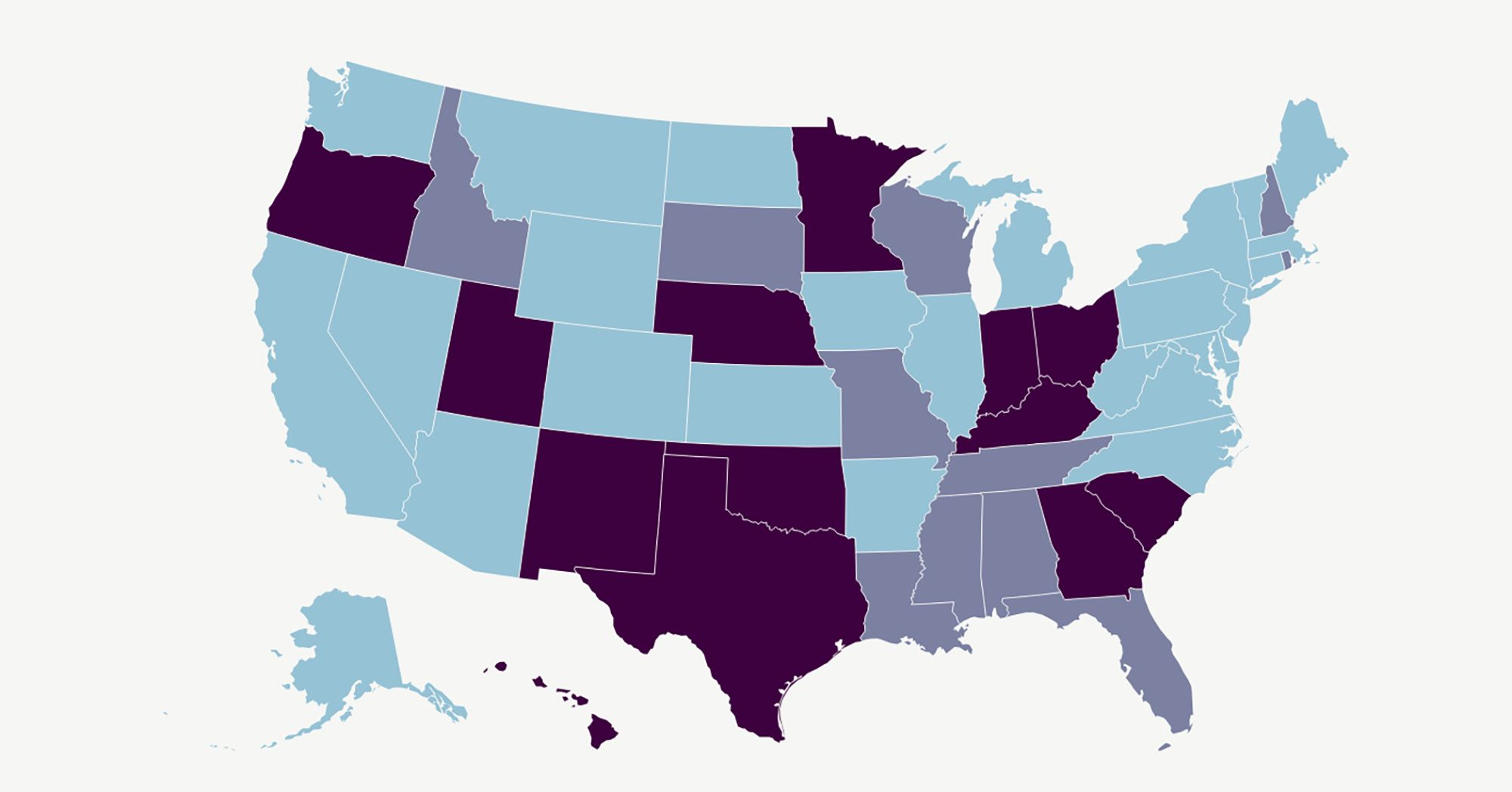
A recent Marshall Project investigation revealed that state child welfare agencies shared allegations of pregnancy substance use with law enforcement more than 70,000 times over a span of six years. These allegations are often based on unreliable drug testing at childbirth, which can return false positives as much as half the time.
Claims of pregnancy drug use led new mothers to be interrogated in their hospital rooms, arrested by police and charged with offenses that carry sentences of up to 10 years in prison. Police removed newborns from their parents’ custody due to false positives triggered by prescription medications, common foods like poppy seeds and legal CBD gummies.
Referral practices vary widely depending on the state. In Oklahoma, one in every 24 births resulted in a law enforcement referral, The Marshall Project found. Meanwhile, in Massachusetts, one in every 5,298 births was referred.
In at least 7,459 cases, or roughly 1 out of every 305 births in Texas over six years, the state’s child welfare agency notified law enforcement of alleged substance use during pregnancy. All known cases were referred to law enforcement.

Child welfare officials said the agency refers all reports of child abuse, including alleged drug use during pregnancy, to law enforcement.
When does child welfare call law enforcement over alleged drug use in pregnancy?
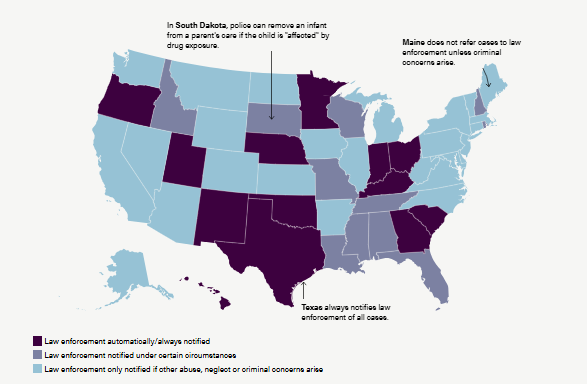
When state agencies did not confirm policies, The Marshall Project relied on publicly available child welfare policies and laws. Alabama and Wisconsin law enforcement referral policies are decided county-by-county.
Map: Jill Castellano and Shoshana Walter, The Marshall Project
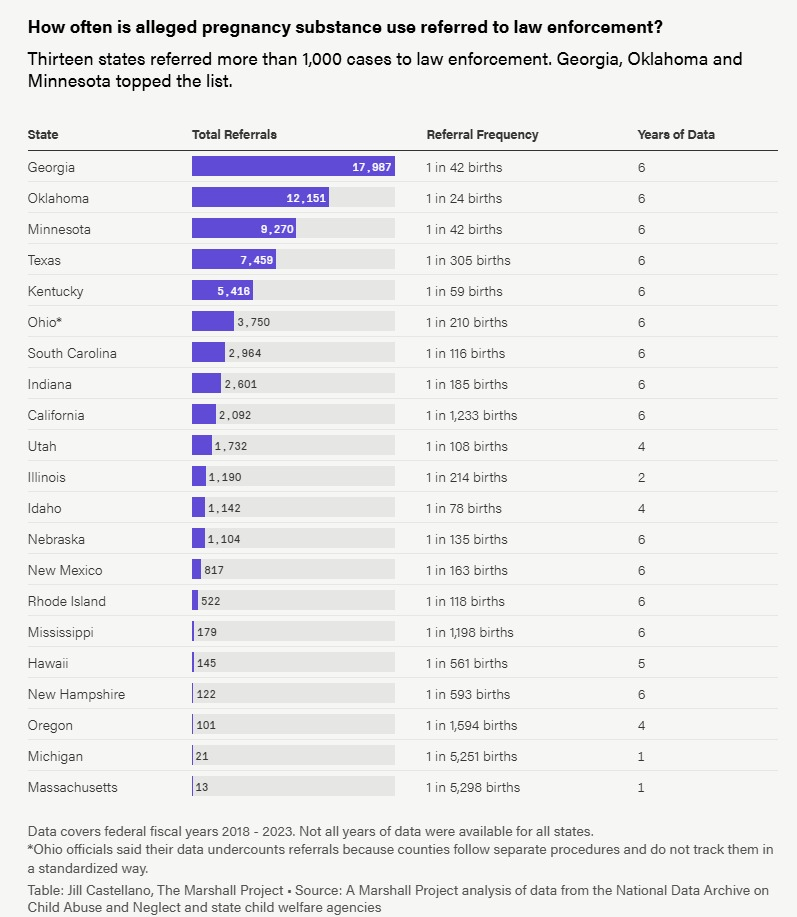
Data covers federal fiscal years 2018 – 2023. Not all years of data were available for all states.
*Ohio officials said their data undercounts referrals because counties follow separate procedures and do not track them in a standardized way.
Table: Jill Castellano, The Marshall ProjectSource: A Marshall Project analysis of data from the National Data Archive on Child Abuse and Neglect and state child welfare agencies
We spent a year gathering and verifying this data with state and federal agencies, and we’re making it available to the public for the first time. We’re also publishing summaries of child welfare policies, which we fact-checked with state officials, explaining what circumstances lead to a law enforcement referral. You can learn more about our reporting process and download the data on our methodology page.
If you are a journalist or researcher interested in investigating the consequences of hospital drug testing at childbirth, we’ve designed a reporting toolkit with free data visualizations, a FOIA template, advice on finding impacted sources, and an interactive tool so people can look up the policies and data in their states. If you’re interested in learning more, you can fill out this form to schedule a consultation.


You must be logged in to post a comment Login