

Google’s two new Haskell County data centers are a trade-off, locals said. They’re boosting the local economy but strained infrastructure in rural West Texas.
By Lana Ferguson
Dallas Morning News
https://www.dallasnews.com/
HASKELL — Nearly 200 miles west of Dallas, Camacho and Charlie’s Mexican Grill & Cantina is typically busy by noon.
Waitresses dish out colorful bowls of guacamole and white queso, sizzling fajita plates and schooners of beer to longtime locals and cowboys.
Haskell Mayor Christina Isbell and City Administrator Winston Stephens Jr. have been regulars since the downtown restaurant opened near city hall a couple years ago.
Nowadays, they’re sharing chips and salsa with people they never expected: Google employees and executives of other businesses tied to the multimillion-dollar hyperscale data center campuses being built just miles away.
On a recent Thursday, Isbell and Stephens had lunch with representatives from an electric company about a fundraising event for the city’s new park.
“Some days it’s exciting, and some days it’s overwhelming,” Stephens reflected outside his office later that afternoon. “I do think a lot of good things are coming to Haskell.”
Isbell agreed.
“Nobody from Haskell County or the city of Haskell went out and looked for data centers to come here. [Google] chose Haskell County,” she said. “These are the cards we’re dealt, so it is my job not just to be mad about it or yell about it. My job is to be pro-Haskell and make this work out for us.”
During a late-October visit, The Dallas Morning News spoke to local officials, business owners and longtime residents in Haskell.

Most conversations walked a middle line of listing both positives and negatives before settling on the fact that the data center projects are going to be built either way, so it makes the most sense to try and benefit from them rather than fight.
The shared attitude is cautious optimism about the opportunity that’s landed in their backyard.
In a matter of months, officials say the promise of these data centers transformed their plans from a shrinking city into dreams of what a prosperous future could be.
Billions in investments
In a star-studded news conference on Nov. 14, 2025, Google executives and Gov. Greg Abbott took the stage outside the company’s Midlothian data center campus 30 miles south of Dallas.
They announced a $40 billion investment in Texas through 2027. The funding was slated to help build cloud and artificial intelligence infrastructure, including two data center campuses in Haskell County. One would be built alongside a new solar and battery storage plant.
“They say that everything is bigger in Texas — and that certainly applies to the golden opportunity with AI,” Alphabet and Google CEO Sundar Pichai said. “This investment will create thousands of jobs, provide skills training to college students and electrical apprentices, and accelerate energy affordability initiatives throughout Texas.”
Although the announcement made the data center plans public, the news took time to reach Haskell County.
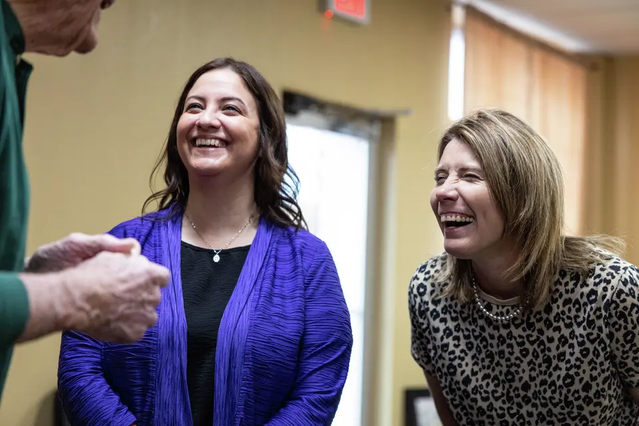
Isbell, a 44-year-old outspoken funeral home director and embalmer who grew up in Haskell, served two terms on City Council and is in her second term as mayor. She said she learned about Google’s plans through an article posted on X in December.
“I saw Google bought a piece of land in the county, and I never thought about it again,” Isbell said. “The city and the county work well together, but the county has their thing and we have our thing. That’s it. It’s kind of like out of sight, out of mind.”
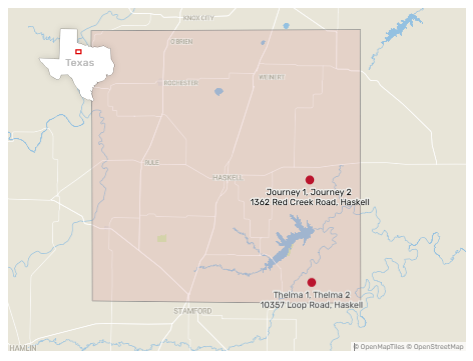
That piece of land became two data center campuses, nicknamed Journey and Thelma, about 20 miles apart. Journey is on Red Creek Road and Thelma is to the south on Loop Road.
Journey will have two data center facilities, one 285,282 square feet and the other 210,420 square feet, according to state filings. Thelma will have two one-story data center buildings, one 280,000 square feet and the second 350,000 square feet.
Haskell County data center campuses
Google is building four large data centers, each over 200,000 square feet, in Haskell County north of Abilene.
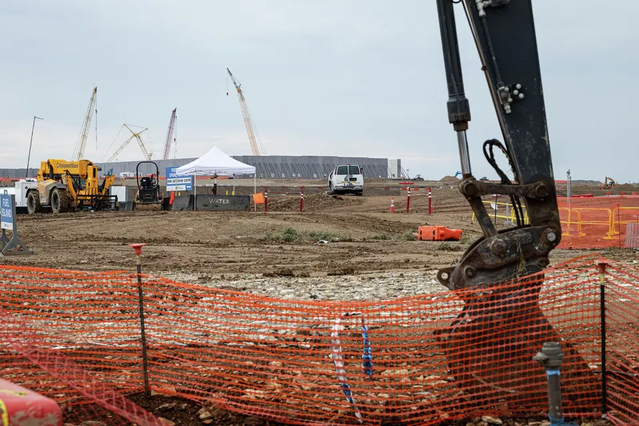
The estimated cost of construction and road and site improvements across the properties is $1.5 billion, the documents show. Completion dates range from August 2027 to March 2028.
Access is limited on the properties. Towering cranes are visible from miles away, and metal fencing blocks off the worksites. A security booth monitors who is coming in and out.
Adjustments to daily life
Though the projects are in the early phases of construction, nearby towns such as Haskell, Rule, and Stamford have begun experiencing trickle-down effects.
Google’s presence in the community — and everything that came with it, like more than 1,200 skilled trades workers during peak construction across both sites — is impossible to ignore.
In a country area where people still bake cookies for their neighbors and wave at every passing car, the effects were first noticed in everyday interactions.
At the county’s lone stoplight, it can take up to three cycles for drivers to get through. The grocery shelves at the local Walmart empty faster. The wait time for Chinese takeout on the downtown square has more than doubled from its usual 10 minutes.
Though months passed between the November announcement and when shovels broke ground, a lot of locals felt like the growth happened overnight.
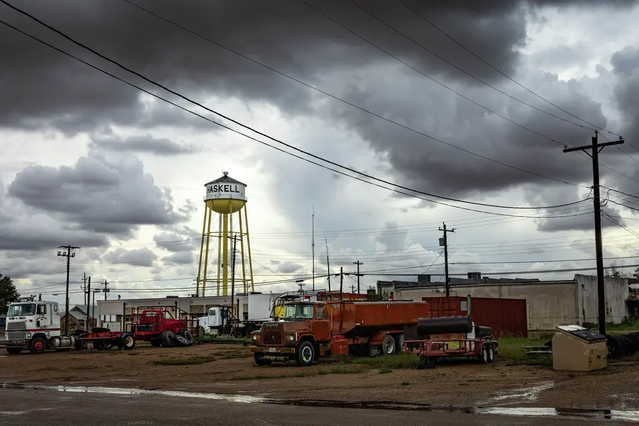
Haskell — population 3,100 — is about an hour’s drive north of Abilene in Texas’ Big Country region. It’s the county seat of Haskell County, which has an estimated 5,500 residents across its roughly 900 square miles.
The data center buildout and influx of other development, like applications for RV parks, prompted local governments to revisit their zoning maps, some of which had not been updated in nearly 25 years.
When residents talk about the negatives, they typically counter with something they’re happy about: Growth brings new neighbors to shop at the local antique stores, cheer on the high school football team under the Friday night lights and fill the church pews on Sunday.
More people means more spending.
Isbell said although Haskell doesn’t directly get tax revenue from Google’s data centers because the buildings are in the county, the city’s sales tax collections rose by approximately 123% from 2025 to 2026.
She said the city budgeted $650,000 for sales tax in a year, but it blew past that, making $1.4 million.
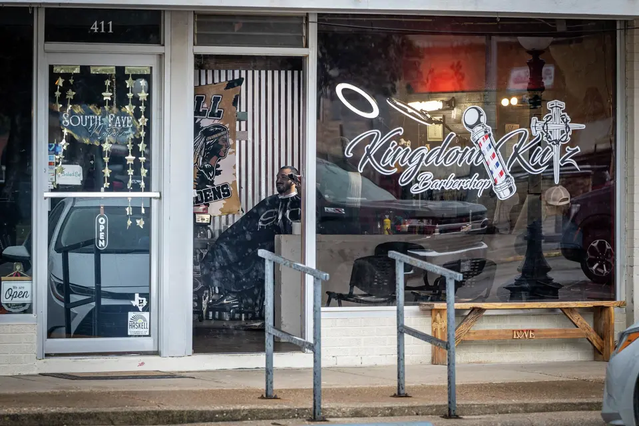
“The sales tax influx is all over the place,” Isbell said. “We don’t know where that’s going to land, so we have to be very conservative with how we use that, how we move forward, and how we implement new things for Haskell. But that’s huge. We can do so much on our infrastructure with our numbers going in that direction.”
In addition to the financial gains, Isbell said community members can feel the vibrancy of downtown again as previously vacant storefronts fill with new businesses and people walk around.
“It is a transformation that’s happening”
Cattle ranching and crops such as cotton, wheat and grain sorghum have traditionally formed the backbone of Haskell County’s economy. Oil and gas production also played a role, though a smaller one than in other parts of West Texas.
Cotton gins and water towers have long stood prominent along the horizon. Now the gaps are being filled with wind turbines and cranes.
Until a couple years ago, there wasn’t a history of a lot of new things being built in Haskell County.
Texas Department of Licensing and Regulation online filings show 37 projects in the county between March 1995 and Nov. 13, 2026, nearly a third of which were made since 2024. In comparison, Dallas County had 96 filings between Nov. 1 and Nov. 13.
Some of the latest filings are tied to Google’s data center campuses, two solar projects, a major Google-funded upgrade to a wastewater treatment plant, and a new Chicken Express.
The renewable energy projects weren’t that surprising, locals said, because those kinds of projects are popping up all over the Lone Star State.

The Google data centers, however, were bewildering for many at first. Mostly because everyone wondered: How in the world did a global company like Google find Haskell County?
Abilene native Haley Stuteville had the same question when she first heard about the data centers.
Now, she’s a community development manager with Google acting as a translator of sorts between the company and residents of Haskell, Paint Creek, Rule and Stamford.
Stuteville said transparency is important to Google, as shown by the leadership meetings the company has with local officials every other week, events open to the public and the forthcoming community advisory council.
“The goal is to be responsive and constantly listening,” Stuteville said, adding that her role is essential for Google putting more emphasis on local relationship-building and partnerships.
She said the life cycle of a data center is at least 30 years, so Google makes a longterm commitment when it builds in a place. She often references Google’s data center in Pryor, Okla.
Built in 2007, it was the company’s first data center in the state and, according to Google, the facility contributes nearly $1 billion to Oklahoma’s GDP each year.
A Google-made video, “20 Years of Impact in Pryor, Oklahoma,” includes interviews with regional officials, business owners and residents boasting about the investments in their community.
“We could use Pryor’s success as a blueprint for other communities,” Pryor Creek Mayor Zac Doyle said in the video. “They’re going to be able to watch by example: A community that was ready for some help and a community that’s taking what we have and making it work for us. Our partnership with Google is strong and solid, and we really appreciate what they’ve done for our community.”
Stuteville said Pryor is a case study for what can happen in other rural communities, but she said the company understands that a new development coming in can be a big change.
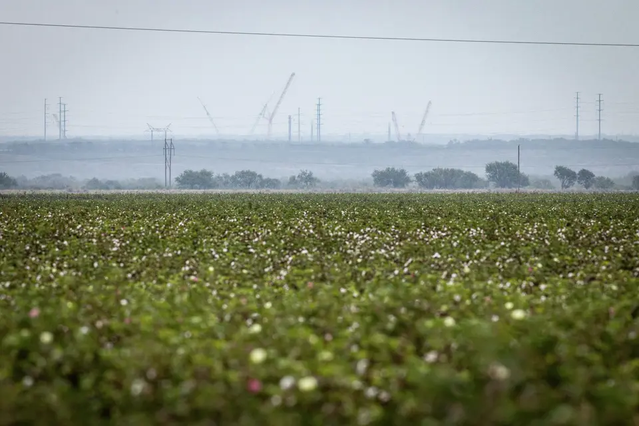
“It is a transformation that’s happening, and that cannot be easy,” Stuteville said. “I feel like there’s no downplaying that, but in terms of trade-off or the silver lining, we talked about the economic benefits of the community.”
Google has put serious money behind their words.
In August, Google sponsored a community dinner at the Haskell Civic Center to announce it was pledging a total of $6 million in donations to the region affected by its rapid data center build out.
“We have been told candidly that we haven’t always been the best partner,” Stuteville said. “Speaking frankly, that is unacceptable to Google, and we want to make it right. A true partnership isn’t just about making investment, it is about showing up and taking responsibility, and following through on what we say we’re going to do.”
Some of the largest donations included $1 million to the Haskell Memorial Hospital Foundation, $750,000 to the Haskell Foundation for critical infrastructure support, $750,000 to Keep Haskell Beautiful and $500,000 to the Haskell Community Giving Fund.
Several other donations were made to local school districts, an EMT foundation, a library foundation, a museum, and more.
Multiple residents told The News they were astounded by how much money Google has poured into the community.
Opportunities for younger generations
Outgoing Haskell County Judge Kenny Thompson has prayed about what all the development in his jurisdiction means.
“It’s been quite a change,” Thompson said. The soft-spoken Sweetwater native moved to Haskell County in 1979 with his wife, who grew up there.
After serving in elected positions with the county for 30 years, 22 as commissioner and eight as judge, the 73-year-old decided to not run for reelection this year.
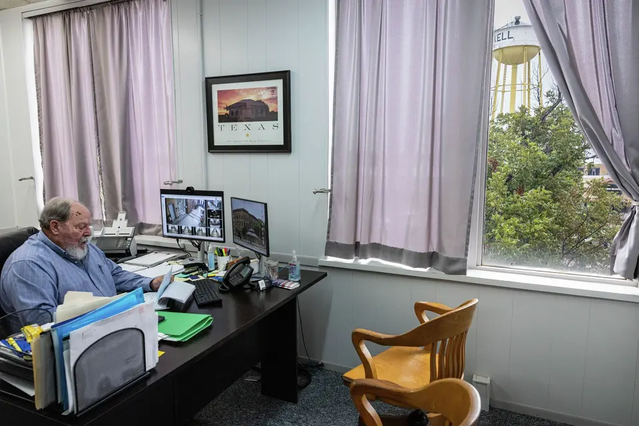
On the heels of his decades of service and an even longer residency, he has spent a lot of time reflecting on what his legacy will be.
Whether he wants it or not, it will include data centers.
He said he’s “mostly happy” Google found Haskell, adding most ranchers near the data centers have learned to live with the projects.
“I mean they’re not crazy about having all the things going on,” Thompson sighed, referring to data centers and energy farms. “I’m not either, really. It’s changing our way of life somewhat and we’re having to adapt.”
He recalled when he first became commissioner and watched his friends have to move away because farmers were going bankrupt. It was — and still is — a hard way to make a living.
So when Google swooped in, Thompson knew it would come with difficulties. He admits the strains on infrastructure happened faster than they anticipated, but he hoped it would also give kids and young adults a chance to stay home instead of moving away to find a job.
“Most people my age don’t like change very much,” Thompson said. “But the thing is, young people are going to be able to have an opportunity to make good money.”
He said Haskell County has maintained its small-town, friendly atmosphere so far, and he hopes the people moving in will adopt those community values.
“I love the way of life here,” he said. “It’s a great place to live.”

The next stage
Like other businesses in rural areas, the Museum of the West Texas Frontier in Stamford’s town square had struggled.
The city-owned museum, originally founded in 1977 as the Cowboy Country Museum, had recently closed for a couple years and reopened in 2021 under nonprofit management.
Last year, as staff faced being just months away from another closure because of a lack of funding, Google walked through the front doors.
“God blessed us more than we could have imagined,” museum director Jewellee Kuenstler said.
The Google employees told her they were interested in building a data center in the area and wanted to learn more about the region. Kuenstler gave them tours and taught them about why people in the area historically worried about things like water supplies.
She spoke with them about the museum’s education outreach, including teaching in Title I schools within a 60-mile radius.
The good rapport eventually turned into a partnership, which led to donations.
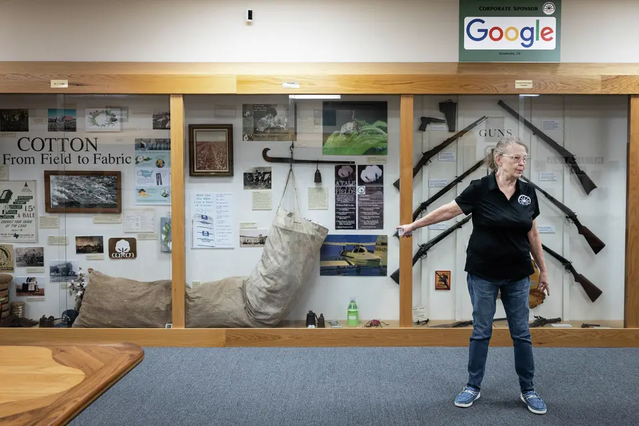
“I’m not gonna lie, I was really hoping for $5,000,” Kuenstler said. “At that point, that was big money for us. They gave us $75,000. It literally kept the doors open and paid for our education program for the next year.”
Signs with Google’s logo now hang throughout the museum, and Google committed another $400,000 in financial support. Kuenstler said the money has no strings attached and allowed them to offer more programming and hire another person.
Looking ahead, plans include an expansion and a new exhibit.
The museum prominently features the five stages of settlement as the “West Texas frontier was tamed.”
In short, Kuenstler said, the stages are the Comanches, ranchers, farmers, railroads and towns.
“Every town and community in West Texas went through those five stages,” Kuenstler said. “Well, we are seriously looking at this next stage, maybe of technology, because we have windmills going up, we have solar farms coming in, and we have these data centers.”
This reporting is part of the Future of North Texas, a community-funded journalism initiative supported by the Commit Partnership, Communities Foundation of Texas, The Dallas Foundation, the Dallas Mavericks, the Dallas Regional Chamber, Deedie Rose, Lisa and Charles Siegel, the McCune-Losinger Family Fund, The Meadows Foundation, the Perot Foundation, the United Way of Metropolitan Dallas and the University of Texas at Dallas. The News retains full editorial control of this coverage.
Energy & Natural Resources Reporter
Lana Ferguson joined The Dallas Morning News after reporting in South Carolina’s Lowcountry for The Island Packet & Beaufort Gazette newspapers. She graduated from the University of Mississippi where she studied journalism and Southern studies. She’s a Virginia native but her work has taken her all over the U.S., southern Africa, and Sri Lanka.


You must be logged in to post a comment Login