

By Melvin Gibbs
JazzTimes
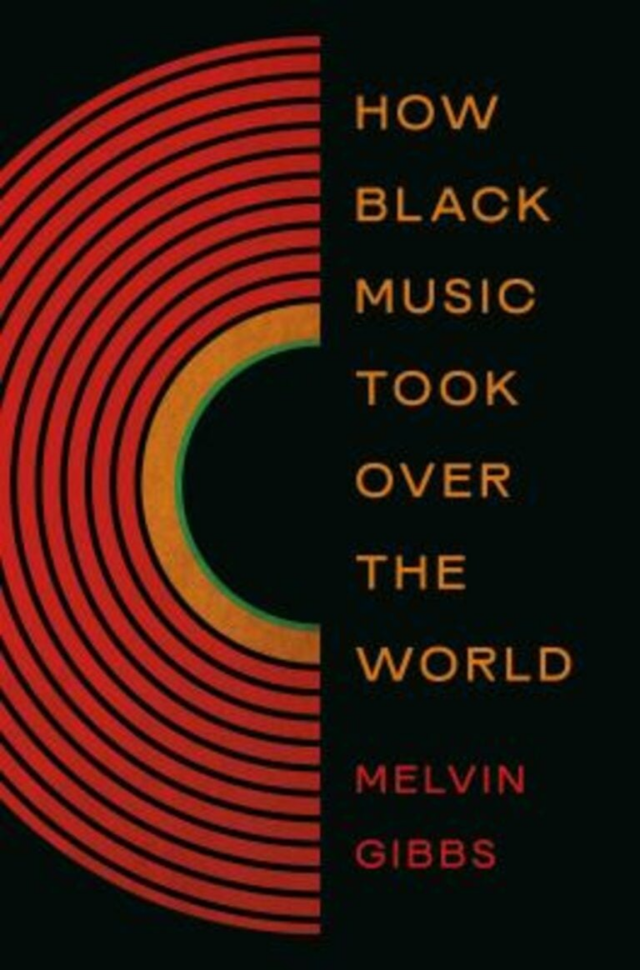
Editor’s note: Musician and author Melvin Gibbs has written a response to Allen Lowe’s recent review of his new book How Black Music Took Over the World. Lowe’s review is here; Gibbs’s rebuttal follows. Both Gibbs and Lowe are repeat contributors to JazzTimes.
I normally don’t respond directly to reviews. I believe that everyone is entitled to their opinion, whether I like it or not. And if I want to discuss that opinion, well, that’s what social media is for. But the amount of willful misunderstanding and erasure of what I wrote in How Black Music Took Over the World has prompted me to issue a clarifying response at the site of the offense.
Allen Lowe writes: “I know that Melvin Gibbs’s How Black Music Took Over the World (Basic Books) is about ‘the world,’ not just the U.S. Of course it’s hard to separate the two, since American culture is emulated, copied and appropriated everywhere.”
My book is not about “American culture.” It’s about Black music, which is a Black cultural form, and the evolutionary processes that drive Black culture in general and Black music in particular. When Lowe refers to Black music as “American culture” he’s repeating exactly the sort of erasure I identify in the “Prelude” chapter of my book.
Hip-hop didn’t take root across the world because it’s American, but because the experiences of Black people living in urban centers in the U.S. resonated with people living in urban centers in other countries. Yes, Kendrick Lamar is American. And yes, Kendrick Lamar is exceptional. But that doesn’t make him, or hip-hop, examples of American exceptionalism. Reducing hip-hop and its performers to “American culture” is like reducing Martin Luther King’s work and legacy to the “I have a dream” soundbite.
Lowe goes on to write: “As a historian, musician and critic, I have problems with the book. For example, Gibbs refers to ‘the musical creativity of the first African Americans and the cultural amalgamation that birthed country music.’ This is an oversimplification, along the lines of Yale Professor Daphne Brooks’s declaration of the supposed ‘essential blackness of country music,’ a framing that’s been widely and uncritically repeated.”
Here, Lowe is straw-manning. He critiques a supposition, the “essential blackness of country music,” that I did not make. In the “Music of Black Science” chapter of my book I expressly state that “looking for an essence that makes music Black is beside the point.”
In my “One Inimitable Sound” chapter I address the history of “the cultural amalgamation that birthed country music.” It is not an oversimplification to state that the pool of music drawn from by those who created country music included music, sounds and instruments created by African Americans. It’s a statement of fact.
The fact that the genre of music we now call “Americana” contains a largely unacknowledged strain of African American influence is one of the larger points of that chapter. The minstrel tradition was one conduit for that influence.
Lowe states that I do not mention Black minstrelsy in my book. I see that as sophistry because I wrote this about William Henry Lane, a.k.a. Master Juba, the person widely credited with inventing tap dance: “Lane was the only dancer of his era allowed to perform alongside white people in white spaces. When he first did so, he was in blackface.” From the standpoint of Lowe’s review and my response, we can parse the difference between minstrelsy and blackface to attempt to win an argument. But from William Henry Lane’s standpoint, as a practical matter the difference was irrelevant.
Lowe states that “contrary to modern belief, [Black minstrelsy] was in fact a radically altering, and arguably liberating, movement.” Well, not contrary to my belief, or the beliefs of the writers that tackled the subject whose names appear in my book’s bibliography. It was profoundly altering for African Americans, but not in a good way. Arguing that Black minstrelsy was liberatory for Black people is like arguing that polluting a body of water is good because it provides entrepreneurship opportunities for business owners in the logistics and beverage sectors and made the person in charge of building the pollution-removal system a multi-millionaire.
There are more misstatements. Lowe quotes my phrase, “gospel music, a form that blossomed in Black churches while the blues was developing in Black clubs,” and tells us, “It is not quite accurate, as it doesn’t really deal with the complexity of those forms. To wit: There is no evidence that the blues developed in Black clubs; in its earliest form it was likely a street/oral culture.” Here, the issue is reading comprehension. A temporal sequence is implied in that statement. Something is born, then it develops, then it blossoms. The text does not state that the blues was born in Black clubs. It reads “developed there,” which is undeniably true.
He goes on to say: “The point ultimately is that, though there are many theories, we don’t know where the blues came from.” First of all, as was just pointed out, there is no hypothesis for the birthplace of the blues given in my book. So that’s both a red herring and a straw man statement. Second, who the f–k is “we”? Historians? Music professors? Or the descendants (both familial and musical) of the people who were there when the blues was invented? Saying “we” in a fundamentally dismissive way when you’ve established no direct connection to the people or culture you are addressing is exactly the sort of arrogant statement that drove me to write this book in the first place.
I wrote “Stono’s Children,” a chapter about Gullah-Geechee culture, which is where spirituals in the U.S. as well as various Christian song traditions throughout the Caribbean find their genesis — a chapter that Lowe doesn’t address at all, by the way — because my heritage is Gullah-Geechee. I’m part of the “we.” And as part of the “we,” I feel that the Gullah-Geechee culture has been undervalued and underexplored by current music scholars. Lowe’s non-response to the cultural information contained in that chapter, if anything, justifies my reasons for including it.
Lowe states that he found my Chapter 10, “The Art of Dub and the Science of Groove,” “with its knowledgeable examination of rhythm and rhythmic frames, to be the most essential — and very much outside of my own field of expertise.” He goes on: “There are plenty of other detailed discussions in the book which merit reading and discussion, though there’s not enough documentation of sources, so we must take Gibbs’s word for many of his assertions.”
I am a primary source who works and interacts with other primary sources. My musical career, my interaction with other practitioners, is my proof. As the great sage Yogi Berra said, “In theory there is no difference between theory and practice. In practice there is.” How Black Music Took Over the World contains unique information because, as a practitioner, I’ve had to answer a set of unique questions that theory-focused, Western-trained musicologists haven’t thought to ask.
As I wrote in the “Prelude” chapter: “[A]spects of the formal analysis of Black music I make in these pages can be found in scholarly literature. But I am a cross-culturally literate expert practitioner who has a lifetime of experience. My analysis is the result of the knowledge and insight gained from that.”
Lowe is concerned that my book “will be read and reviewed by (especially white) critics who have narrow knowledge of Black music history in all its complexity, and whose liberal tendency is to overcompensate for that lack of knowledge.” I’ll just say that there’s more than one way to overcompensate for lack of knowledge, and the liberal way is not the only way.
In America, the right to critique ideas is under pressure. We still have the right to do so and I believe we should. But let’s critique the actual ideas presented, not a manipulated version of them. JT
Melvin Gibbs
Melvin Gibbs is a bass guitarist, composer, and producer whose 40-year career has featured work with Defunkt, Ronald Shannon Jackson’s Decoding Society, Eye and I, Sonny Sharrock, John Zorn, Rollins Band, Eddie Palmieri, Femi Kuti, and Arto Lindsay, among many others. He is currently one-third of the trio Harriet Tubman with guitarist Brandon Ross and drummer J.T. Lewis. In the 1980s, he was an original member of the Black Rock Coalition.


You must be logged in to post a comment Login