

Vietnam corpsman’s selflessness is inspiring. Now Cornyn, Cruz, Allred or Hegseth can make sure he’s rewarded.
By John McCaa
Dallas Morning News
https://www.dallasnews.com/
The orders were clear: flush out and destroy units of the North Vietnamese Army infiltrating south through the central coastal region.
Enemy forces had been creeping through the hills and valleys of the area in sizeable numbers. To halt them, the American First Marine Division and South Vietnamese troops had been engaging them for two months, all part of Operation Oklahoma Hills.
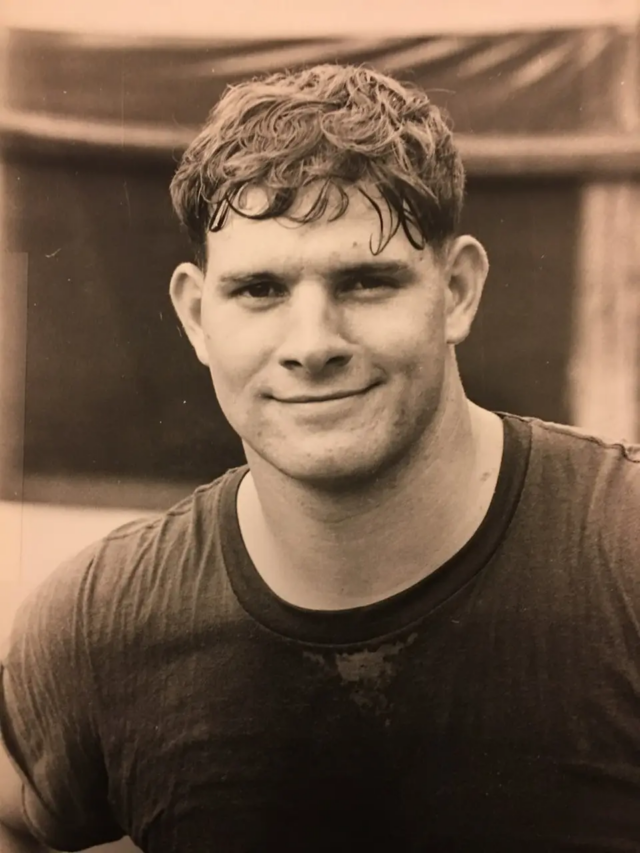
On the night of May 29, 1969, a 19-year-old Navy hospital corpsman named Michael Kuklenski, nicknamed “Doc” by the 30 Marines with whom he deployed, helped set up to ambush the infiltrators just ahead of the main operating base southwest of Da Nang.
The story of that night’s firefight has been told powerfully in these pages before, and in military histories and award citations.
The weather was clear. The night was moonless. Small hills dotted the landscape with scattered trees and some underbrush. The dispersed Americans waited in silence, weapons at the ready, hidden but not hidden enough.
They had been told 30 enemy soldiers would come down the trail and walk right into their trap.
Suddenly gunfire and explosions poured in on the Marines from different directions. Their ambush had been detected. They now faced assault by a heavily armed, well-trained company of not 30 but as many as 100 men. The attackers carried small arms, automatic weapons, hand grenades and rocket-propelled grenades as they closed in on the Marines from three sides.
Just as the battle started, a grenade went off to Kuklenski’s left, slamming him to the ground and jamming a piece of shrapnel into his right thigh. Fragments from the grenade and other debris had also pierced his elbow and biceps. Meanwhile, all around him the chaos expanded. So did the shouts of “Corpsman up!”
Despite his injuries, Kuklenski staggered, crawled, and inched his way from one wounded comrade to the next, patching up every Marine who called to him.
A bullet that struck one man in the chest fragmented leaving a sizeable hole that took nearly all of Kuklenski’s bandages.
As he continued treating the injured, Kuklenski gathered ammunition clips and passed them to anyone still capable of returning fire.
Bedlam reigned as bullets split the night sky.
One battered, confused Marine stood up, exposing himself to enemy gunfire. Kuklenski yanked him down but not before taking a bullet in the shoulder.
By the time reinforcements arrived half an hour later to drive back their advancing adversaries, Kuklenski had been struck by yet another piece of shrapnel and shot again. This time through his right shin.
All the while, he continued caring for casualties, preparing them for evacuation, dragging himself on his elbows to reach the next Marine because of the injuries to his legs.
Finally, a senior corpsman arrived and ordered Kuklenski evacuated. Aboard the helicopter, “Doc” realized he was almost stripped to his underwear. Out of bandages, he had torn his own uniform apart to help the injured.
Four Marines died that night, 18 others were wounded.
Kuklenski had no recollection of any pain and no idea of the number of people he treated.
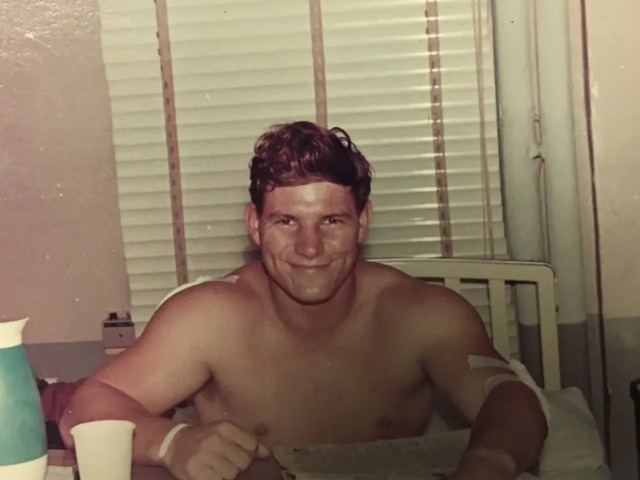
His injuries took the young corpsman first to a hospital in Da Nang, where some worried he might never walk again. Later in Japan, he underwent more extensive treatment and recovered so quickly he was sent back to Vietnam to finish his tour.
Conscientious objector
Part of what makes Michael Kuklenski’s story so amazing is the fact that he was a conscientious objector.
He had always dreamed of a medical career, but with no money for school he entered the Navy as a hospital corpsman.
As a devout Catholic and graduate of Jesuit High School in Dallas, he told his superiors, “The idea that one of the commandments was ‘Thou shalt not kill’ seemed to make sense to me.” He had never even hunted. He wanted to be a noncombatant.
Kuklenski was not the first. Army medic Desmond Doss, a Seventh-day Adventist with strong views against killing and carrying a gun received the Medal of Honor after saving an estimated 75 soldiers on Okinawa during World War II. Doss was one of about 25,000 conscientious objectors who served in that war.
Like many veterans, Kuklenski had issues adjusting to life when he came home. Post Traumatic Stress Disorder (PTSD) limited his career.
Even now, more than half a century after those violent explosions lit up Quang Nam Province, the memories remain for Kuklenski. The chaos, the shouts for help and the faces of the many men he helped to cheat death that night are still fresh.
Medals and honor
The Marines of Company A, First Battalion, Seventh Marines of First Marine Division have not forgotten either.
Medals and honor
The Marines of Company A, First Battalion, Seventh Marines of First Marine Division have not forgotten either.
In official after-action reports, Lance Corporal Walter Hunziker explained Kuklenski, “didn’t even put a bandage on himself until help came.” Private First-Class Shawn Lee noted that, unable to walk, Kuklenski, “began to go out in the fire to patch up the ones that were still out in the open.”
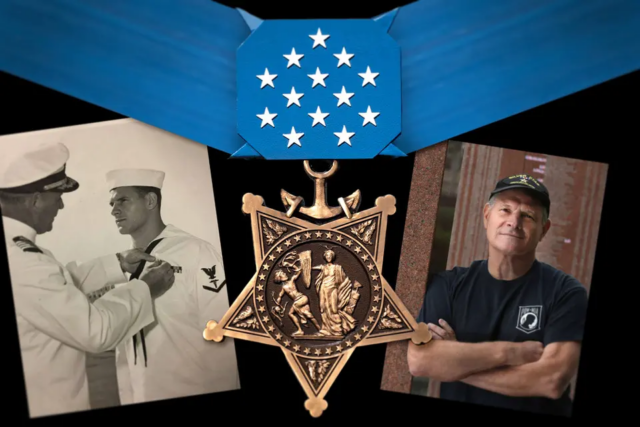
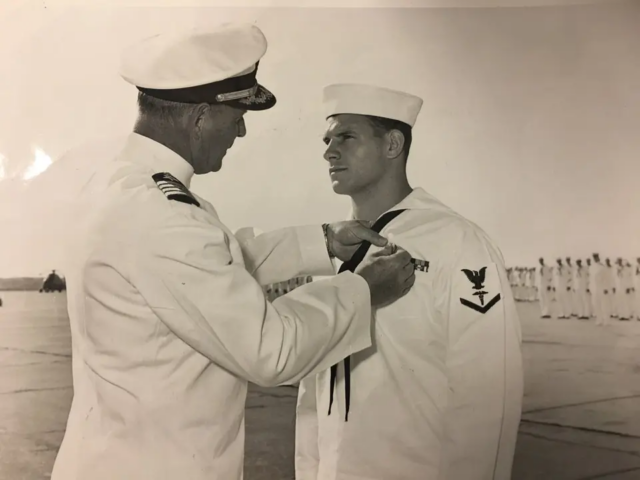
Michael Kuklenski was awarded the Silver Star and Bronze Star for his actions. But many with him that night, such as machine gunner Emmett Wheeler, believe Kuklenski’s actions deserved the Medal of Honor – the highest military decoration awarded by the United States. Wheeler told the Veterans’ Administration, “to witness someone risk their life to save others is beyond description.”
That may be true, but getting an upgrade to America’s highest medal for bravery is extremely difficult and very rare. By federal law, Medal of Honor recommendations must be submitted within three years after the service member’s actions and complete approval within five years. That would exclude Kuklenski.
However, California Congressman Darrell Issa has been pushing a proposal to drop that rule. Earlier this year he spearheaded the awarding of the Medal of Honor to a Korean War pilot whose deeds during a secret mission remained classified for decades.
Congress can also bypass that time limit with an individual waiver that authorizes the president to award the Medal of Honor. It has happened more than 90 times since 1981, some for actions as far back as the Civil War.
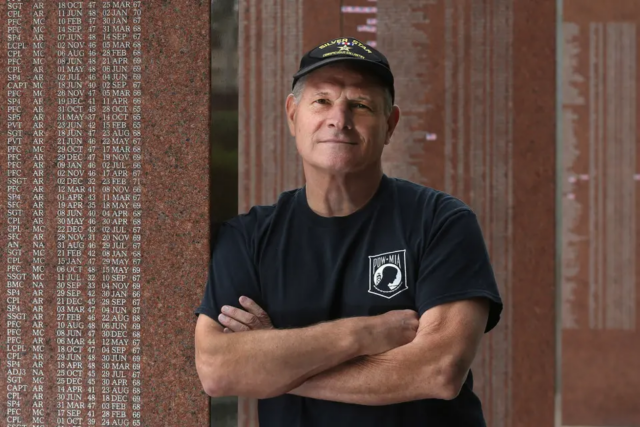
Kuklenski is now a long-time Rowlett resident. The city honored his Naval service in 2022. But the Medal of Honor elevation has remained elusive.
Another of Kuklenski’s brothers in arms, David Hardin of New Jersey, agrees “Doc” should get the Medal of Honor. “He saved my life,” Hardin told The Dallas Morning News’ David Tarrant in 2017. After the war, Hardin came home, married, had three kids and nine grandchildren. “They’re alive because of him,” he told Tarrant.
In the last couple of years, Kuklenski has assembled his comrades’ correspondences of praise, after-action reports from his Vietnam-era doctors and commanding officers, and newspaper accounts of what he went through and sent them off to Senators John Cornyn and Ted Cruz, his then-Congressman Colin Allred, and Secretary of Defense Pete Hegseth, requesting the upgrade.
Still no word from Washington.
For now, he makes himself available to meet with younger combat veterans to help them cope with whatever nightmares they might have brought home from service.
And believing the 250th anniversary of the signing of the Declaration of Independence just might be the right time to honor a man who, for religious reasons, declined to kill in its defense but signed up to save the lives of so many, he still has hopes for an upgrade.
Have thoughts about this? Send a letter to the editor using our letters form or email letters@dallasnews.com. Letters should be no more than 200 words and include the first and last name of the writer and city of residence.
John McCaa is an award-winning, veteran journalist who anchored the WFAA evening newscast in Dallas from 1992 to 2019. He has previously served as president of the Press Club of Dallas, and he has been inducted National Association of Black Journalists Hall of Fame. Now retired, he is a Dallas Morning News contributing columnist.
This story, originally published in The Dallas Morning News, is reprinted as part of a collaborative partnership between The Dallas Morning News and Texas Metro News. The partnership seeks to boost coverage of Dallas’ communities of color, particularly in southern Dallas.


You must be logged in to post a comment Login