By Dr. Gerald Britt
Texas Metro News
https://texasmetronews.com


I know there are those who don’t agree. But I hope it makes you think…
James Talarico will have my vote in November — that much is clear. The stakes are too high, the contrast too stark, and the alternative too dangerous to pretend otherwise. But clarity is not complacency. A vote is not a blank check. A vote is not a vow of silence. And a vote does not exempt any candidate from the work required to earn the trust of the communities whose turnout will decide the margin.
Every election cycle, campaigns make confident assumptions about who will vote, who won’t, and which communities can be counted on without question. And every cycle, those assumptions collide with reality. Coalitions don’t maintain themselves. Voters don’t mobilize themselves. And no community — especially Black voters in Texas — should ever be treated as an automatic deposit in someone else’s political bank.
That truth sits at the center of the conversation around Representative James Talarico’s statewide candidacy. His supporters have framed him as the rare Democrat who can assemble a new coalition: disaffected white moderates, independents exhausted by extremism, and Hispanic voters who feel politically unanchored. It’s an appealing vision. Texas needs coalitions that stretch beyond the predictable.
But as political commentator Reecie Colbert — host of The Reecie Colbert Show and a nationally recognized voice on Black political engagement — pointed out with her signature blend of sarcasm and precision, if you’re going to claim you’re the one who can build that coalition, then you need to show you can also earn the support of the voters who have been the backbone of Democratic viability in this state. That includes Black voters whose loyalty is often assumed but whose turnout is never guaranteed.
This is not a personal critique. It’s a structural one. It’s a reminder that coalition‑building is not a matter of vibes or viral clips. It’s relational work. It’s presence. It’s respect. And it’s the willingness to show up in communities that have been asked to save democracy more times than democracy has shown up for them.
Black voters in Texas — particularly in Dallas County — are loyal, but not automatic. They are politically sophisticated but not politically naïve. They understand the stakes of a binary November choice, but they also understand the difference between being valued and being used. And after what happened in Dallas and Williamson Counties on Election Day, the idea that November’s outcome is assured borders on delusion.
The Dallas Reality: Turnout Is a Geography, Not a Theory
Dallas County’s Democratic margins are built in very specific places. What we do know from the most recent complete dataset — the March 2024 Democratic primary — is that turnout in many majority‑Black precincts lagged behind countywide averages. Looking at select city of Dallas precincts, these southern, majority‑Black communities show what I mean. In Pleasant Grove, South Dallas, Cedar Crest, and the southern sectors of Oak Cliff, numerous precincts posted turnout in the single‑digit to low‑teens range, well below the countywide Democratic turnout of roughly 17% that year. In the southern suburbs of Dallas County — Lancaster, DeSoto, and Glenn Heights — turnout was generally higher but still uneven, with several precincts underperforming their 2020 and 2022 levels. These patterns provide the clearest baseline we have until Dallas County releases the full 2026 precinct‑level canvass.
These neighborhoods are rich in civic life but often poor in political attention. They respond to presence, not presumption. They respond to candidates who understand that Black civic infrastructure — churches, neighborhood associations, fraternities and sororities, legacy organizations — is not ornamental. It is the engine of turnout.
The Generational Shift: Younger Black Voters Are Not Automatic
Younger Black voters in Dallas County are the least likely to accept the idea that their vote is owed. They are the most skeptical of candidates who appear only during election season. They want clarity on policy, not platitudes. They want authenticity, not performance. They want to know that their concerns — about criminal justice, economic mobility, education, housing, and voting rights — are not footnotes in someone else’s coalition strategy.
The Voter‑Suppression Context: Dallas and Williamson Counties
This year’s primary exposed just how fragile turnout can be when election administration falters.
In 2026, several Texas counties were forced to abandon the vote‑center model and return to precinct‑only voting. Dallas and Williamson Counties experienced the most visible confusion. Wrong addresses. Misdirected polling locations. Long lines. Poll workers unsure of the new procedures. Voters driving from site to site trying to find the right place.
When a district court attempted to extend voting hours to mitigate the harm, the state intervened to stop it. The result was predictable: voters who believed they would be allowed to vote were turned away.
You don’t need to call that “voter suppression” to understand its impact. You only need to understand that when access is restricted, turnout becomes fragile. And when turnout becomes fragile, the burden shifts to campaigns to do the work — the real work — of engagement.
What “Earning the Black Vote” Actually Requires
If campaigns want to talk seriously about coalitions, then they must talk seriously about the work required to earn Black support — not in theory, but in practice. In Dallas County, that work is not mysterious. It is well‑known, well‑documented, and consistently ignored by campaigns that assume loyalty rather than cultivate it.
1. Invest in local Black political consultants — early, not as an afterthought
Black consultants understand the civic landscape, institutional networks, neighborhood‑level turnout patterns, and trusted messengers. Real engagement means hiring them early enough to shape strategy, not just execute it.
2. Advertise in Black media early — and not in late October
Dallas has a long‑standing Black media ecosystem: Texas Metro News, The Dallas Examiner, K104, gospel and talk radio programming, and local podcasters across a growing digital landscape. Black voters notice when campaigns only show up in these spaces two weeks before Election Day. Sustained advertising signals respect.
3. Sit for interviews with local Black media news outlets
Black journalists and commentators are central to shaping political understanding in Black communities. Avoiding these outlets sends a message — and not the one campaigns intend.
4. Meet with Black leadership — not just once, and not just the “usual suspects”
Dallas County’s Black leadership is layered: it’s not just pastors anymore (although they are still included), but also neighborhood association presidents, civic organizers, nonprofit leaders, educators, small‑business owners, activists, fraternity and sorority leadership, and long‑time precinct chairs. Engagement must be early, repeated, and rooted in listening.
5. Deploy campaign surrogates who have real relationships in Black communities
Effective surrogates are clergy, civic leaders, organizers, educators, and local elected officials with credibility. Surrogates who are unknown or parachuted in at the last minute do more harm than good.
6. Show up physically — repeatedly — in the neighborhoods where turnout is won or lost
Pleasant Grove, South Dallas, Cedar Crest, Oak Cliff’s southern sectors, Lancaster, DeSoto, and Glenn Heights are where Democratic margins are built. Presence matters. Consistency matters. Showing up outside election season matters.
7. Speak clearly to the issues that are important to Black voters
Black voters consistently cite criminal justice, economic mobility, education, housing affordability, health access, and voting rights. Policy clarity is foundational.
8. Respect Black voters enough not to assume you know them
This is the through‑line. Earning the vote means respect, presence, investment, partnership, and accountability. Anything less is not coalition‑building. It is coalition‑borrowing — and borrowed coalitions collapse.
The Coalition Question: You Can’t Build a New One While Neglecting the Old One
This is where Reecie Colbert’s challenge lands with force. Her point was simple: if you claim you can build a coalition that goes beyond the traditional Democratic base, then show you can strengthen it as well. If you say you can bring in disaffected white moderates, independents, and Hispanic voters, then demonstrate that you can also earn the trust of Black voters who have been carrying the weight of Texas politics for decades.
Coalitions are not built by proclamation. They are built by presence. They are built by listening. They are built by showing up in the places where turnout is not guaranteed but must be earned.
The Work Ahead
In moments like this, I’m reminded of the 1940 Democratic National Convention — a room fractured by conflict, uncertainty, and competing visions of the future. Franklin Roosevelt didn’t attend; he sent Eleanor as his proxy to steady the hall. She walked into that storm, looked out at a divided party, and offered a simple, clarifying truth: “This is no ordinary time.”
It wasn’t a slogan. It was a summons — to seriousness, to responsibility, to the work required when the stakes are larger grievance.
This, too, is no ordinary time. The November election will be a binary choice, but the path to November is not. It is relational and strategic, and it requires every candidate who claims to represent a broad coalition to demonstrate that they understand the communities whose votes are too often assumed and too rarely engaged. If this is the coalition moment people say it is, then let the work reflect the rhetoric. Let the engagement match the ambition. And let every community — including Black voters — be treated not as a foregone conclusion, but as a constituency worthy of respect, investment, and genuine political partnership.
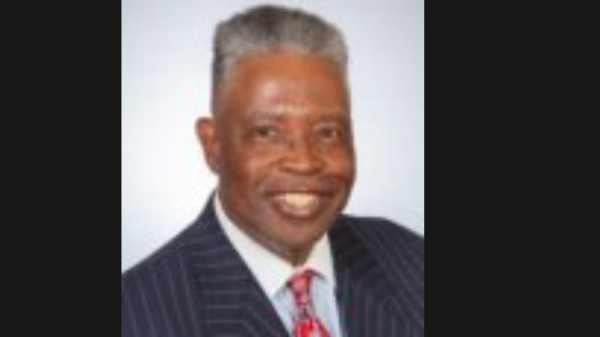
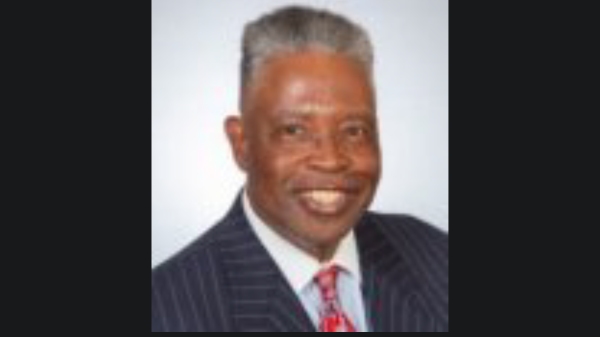
Dr. Gerald Britt is a spiritual leader, workforce development director, and thought-provoking blogger.






You must be logged in to post a comment Login