

By Marc Morial
NNPA
https://nnpa.gov

“This act flows from a clear and simple wrong. Its only purpose is to right that wrong. Millions of Americans are denied the right to vote because of their color. This law will ensure them the right to vote. The wrong is one which no American, in his heart, can justify. The right is one which no American, true to our principles, can deny.” —President Lyndon B. Johnson, as he signed the Voting Rights Act of 1964
The Supreme Court holds the future of America in its hands this week. It gets to decide whether this is a nation that serves a great many or only the voices of a select few. It is going to determine if we are charting a path towards fulfilling our promise of liberty, justice, and the pursuit of happiness for all, or backsliding to a dark past where a racial caste system denied the right to vote to millions of Americans based on the color of their skin.
That is what is at the heart of Louisiana v. Callais, a case that will decide the legality of a congressional map that adequately reflects the population of the same state where the very same court declared segregation legal just over a century ago in Plessy v. Ferguson.
In Louisiana v. Callais, a group of “non-African-American” voters is decrying that a newly created district in 2024 that allotted for two majority African American congressional districts, two of six, which directly reflects the state’s Black population, discriminates against them.
Civil rights groups argue that the new district is lawful under Section 2 of the Voting Rights Act of 1964 (VRA). For those of you unfamiliar with Section 2, it allows for legal action against state entities, including states, counties, and municipalities, on the following factors:
1. The history of official voting-related discrimination in the state or political subdivision;
2. The extent to which voting in the elections of the state or political subdivision is racially polarized.
3. The extent to which the state of political subdivision has used voting practices or procedures that tend to enhance the opportunity for discrimination against the minority group, such as extensive election districts, majority-vote requirements and prohibitions against ballot voting.
4. The exclusion of members of the minority group from candidate slating processes;
5. The extent to which minority group members bear the effects of discrimination in areas such as education, employment, and health hinders their ability to participate effectively in the political process.
6. The use of overt or subtle racial appeals in political campaigns; and
7. The extent to which members of the minority group have been elected to public office in the jurisdiction.
Let’s look at the history of Louisiana, a state that allowed generations of poll taxes, literacy tests, race-based terror, and again, Plessy v. Ferguson, to mar its past; the state has a history of voting discrimination.
It is also clear that favoring a congressional map that concentrates political power in a party that has demonstrated that the needs of working-class and poor Louisianans, who are disproportionately Black, don’t matter is also a violation.
Speaker of the House Mike Johnson, La.-4th District, has presided over a Congress that has passed a massive spending bill that provided one of the most significant wealth transfers in American history from the poor to the wealthy, while slashing Medicaid and SNAP benefits. The same bill slashed the environmental protections in a state home to Cancer Alley, a 150-mile stretch of oil refineries and chemical plants through majority African American communities.
And make no mistake, striking down Section 2 won’t stop at disenfranchisement in Louisiana. In the last two, North Carolina, Missouri, and Texas have been directed to redraw their state maps to increase Republican seats in the House of Representatives.
Gutting section 2 of the VRA is not only a disgrace but an assault on the 15th Amendment, the Constitution, and what it means to live in America itself.
If this is a nation where every American should have the right to freedom and to have a voice in the future of this country, then we must call out when the highest court in the land chooses to silence large swaths of us based on the color of our skin and our beliefs.
This is an attack on Black voting power, an attack on Black America, and an attack on the future of American Democracy.
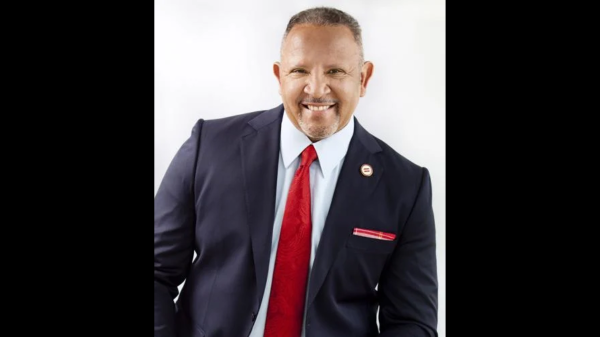
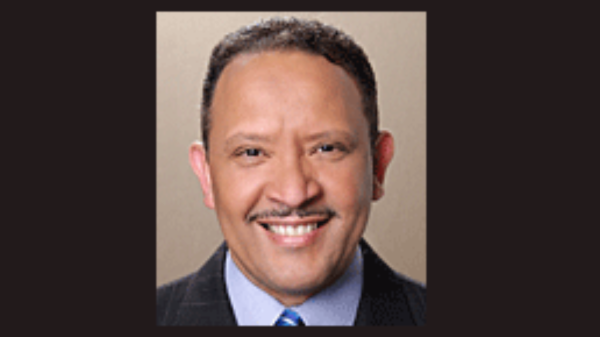
Marc H. Morial is the president and CEO of the National Urban League.






You must be logged in to post a comment Login